ServicesChlorine & Chloramine Removal
Chlorine & Chloramine Removal in Tampa
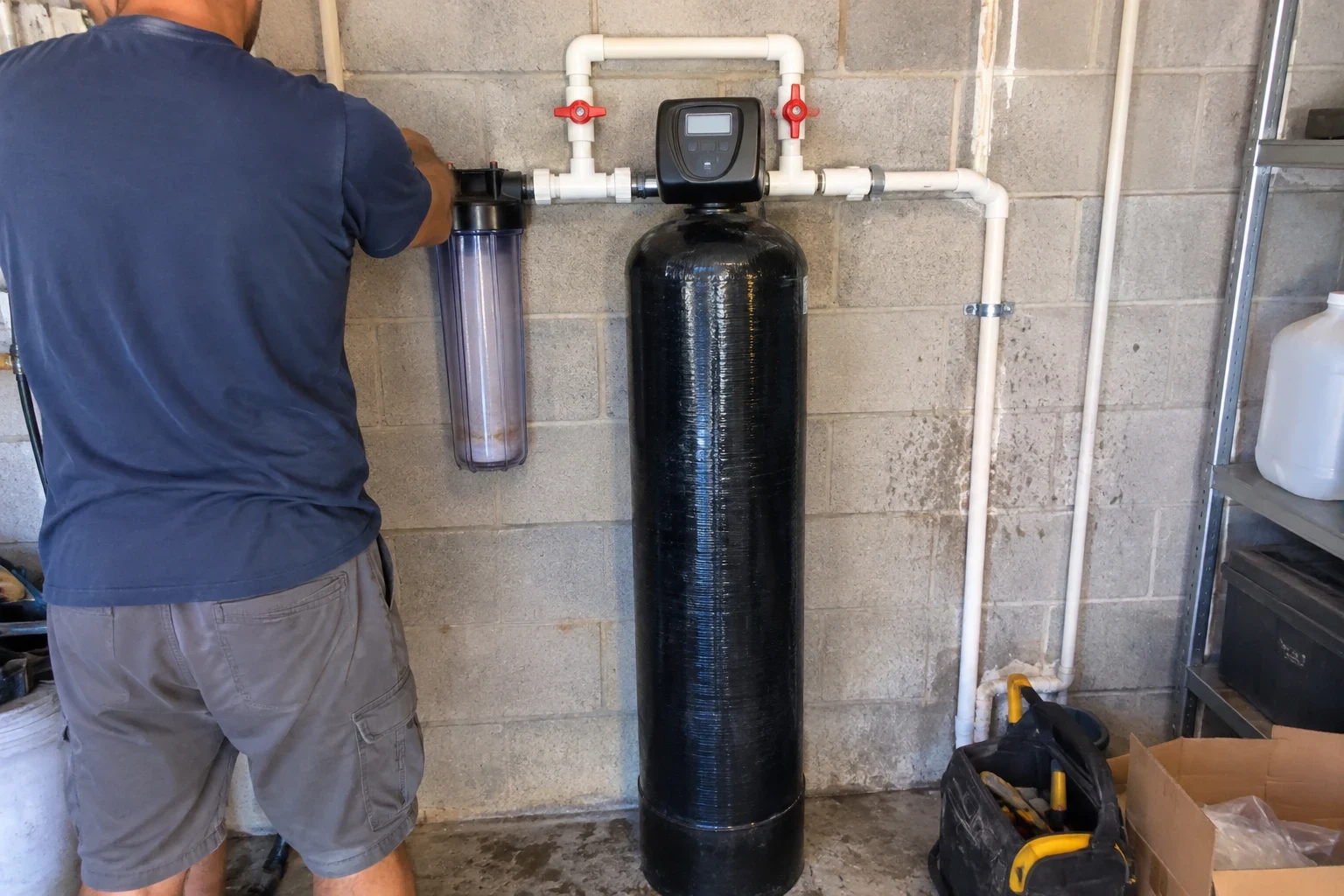
We install whole-home carbon systems that strip the pool smell from your tap water and take the bite out of your shower. Chloramine needs a different media than plain chlorine, so we size the tank and choose the carbon for the disinfectant your water actually carries.
Why chloramine needs more than an ordinary carbon filter
Water providers dose a disinfectant to keep water safe through long runs of underground pipe before it reaches your faucet. Some dose free chlorine. A growing number dose chloramine, a compound made by combining chlorine with ammonia. It holds up longer in the pipes, and that staying power is exactly why it is harder to remove at your home.
Plain granular activated carbon pulls free chlorine out fast. Chloramine reacts far more slowly, so standard carbon lets much of it through at everyday household flow rates. Catalytic carbon has a treated surface that splits chloramine into its parts, but it needs more contact time, so the tank is larger than one built only for chlorine. Before we price anything, we read your provider's published water quality report to confirm which disinfectant reaches your tap.
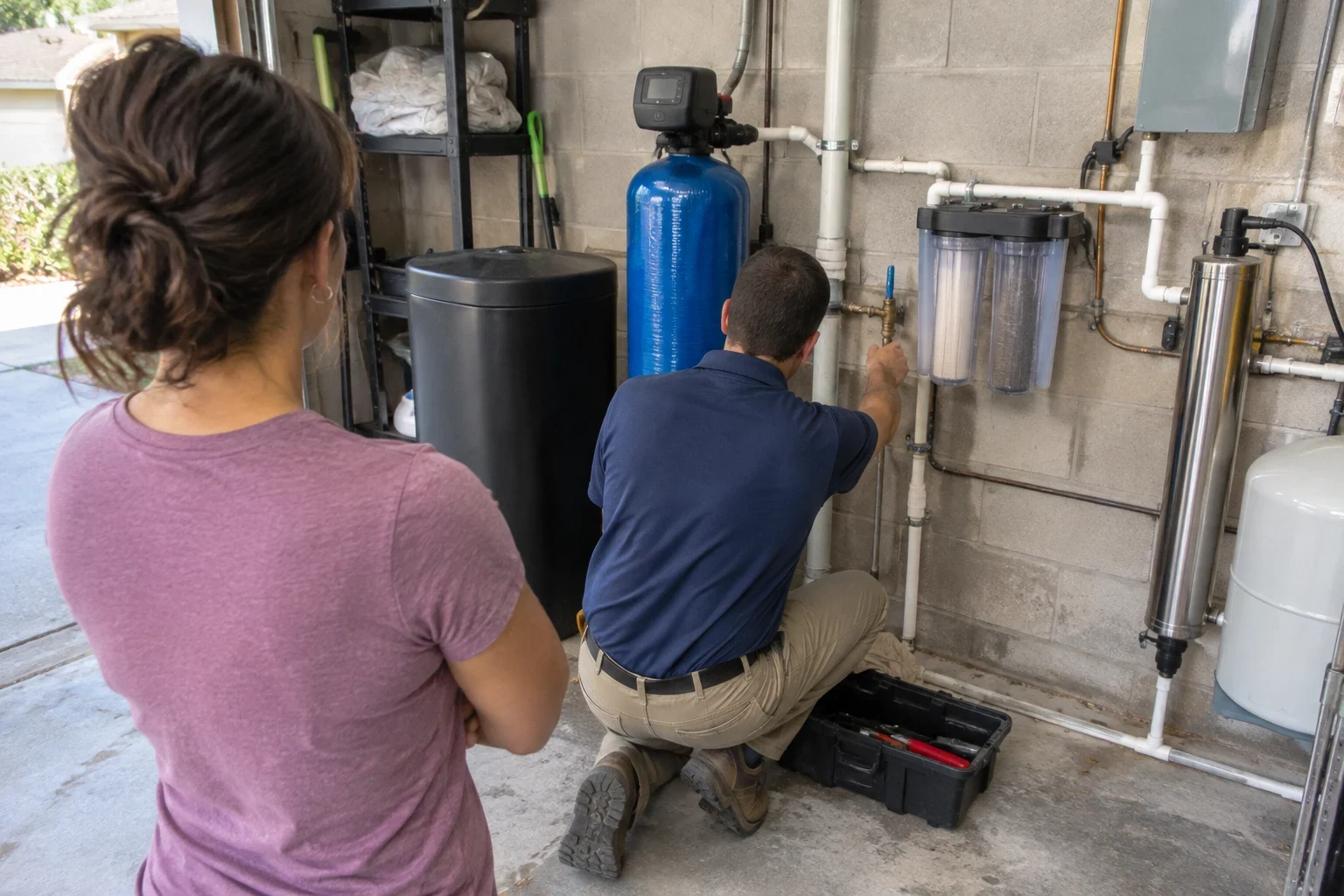
Because the job takes place inside and around your home, we work the way you would want a guest to. Floors are covered along our path, the drain line goes to a proper drain, and we sweep and wipe down the work area before leaving each day.
What the installation includes
- Catalytic carbon tank sized to your flow
- We size the media bed by the gallons per minute your home draws at peak, not by bathroom count alone. More media gives the water longer contact time, which is what chloramine reduction depends on.
- Sediment prefilter
- A cartridge prefilter catches grit and pipe scale before it reaches the carbon. That keeps the bed from fouling early and protects the control valve.
- Bypass valve and main-line tie-in
- We cut the system into your main line after the shutoff, with a bypass so you can keep water flowing during service. Fittings are matched to your existing pipe material, whether copper, CPVC or PEX.
- Drain line and initial flush
- Backwashing systems need a drain connection, which we route to an approved drain with an air gap. New carbon releases fine black dust on startup, so we flush it to that drain until the water runs clear, never through your fixtures.
- Protection and daily cleanup
- Drop cloths go down along the work path, and we wear shoe covers indoors. Packaging, pipe offcuts and old fittings leave with us.
When your tap water calls for disinfectant removal
Swimming-pool odor from faucets
A sharp chemical smell that gets stronger in a hot shower is disinfectant gassing off as the water warms and atomizes.
Tight skin and dull hair after bathing
Chlorine and chloramine both oxidize what they touch. Many people find their skin feels drawn and their hair turns coarse, then notice a change once shower water is treated.
A pitcher filter that no longer helps
Small pitcher cartridges usually reduce free chlorine but do little against chloramine. If the off taste returned after your provider changed disinfectants, the cartridge media is the likely cause.
Fish that keep getting sick
Chloramine is toxic to fish, and basic dechlorinating drops made for chlorine leave the ammonia portion untreated. Removing it at the main line makes tank and pond water changes easier.
Flappers and washers failing early
Chloramine is known to break down certain rubber parts, such as toilet flappers and faucet washers, faster than free chlorine.
How the job runs from first call to clean floor
- 1
Phone conversation
We ask about your home's size, number of bathrooms, pipe material and where the main line enters. That tells us roughly what tank size and placement make sense before anyone visits.
- 2
Site visit and written plan
We look at the main line, the nearest drain and an outlet if the valve needs power. Then we explain the tank size, the carbon type and why we chose them, with a line-item estimate.
- 3
Installation day
We protect the floor and walls along the path, shut off the water, make the tie-in and mount the tank on a level pad. In Florida many main lines enter along an outside wall or in the garage, so we set the system where it is shaded and easy to reach for service.
- 4
Flush, check and cleanup
We flush the new carbon to drain, check every joint for leaks under pressure and show you the bypass and the prefilter housing. The area is swept and wiped before we go.
What moves the price
Most of the cost comes from how much catalytic carbon your home needs and how hard the tie-in is to reach. We give you the number by phone once we understand the setup, and in writing after the visit.
- Chlorine versus chloramine
- Chlorine-only systems can use standard carbon in a smaller tank. Chloramine calls for catalytic carbon and more of it, which raises the media cost.
- Peak flow demand
- A home that runs two showers and a washer at once needs a larger bed to keep contact time up. Undersizing saves money at first but lets chloramine slip through.
- Backwashing or upflow tank
- A backwashing valve keeps the bed loose and lasts longer but needs a drain and often power. An upflow tank skips both, which can simplify placement.
- Main-line access and pipe material
- An exposed line in the garage is a quick tie-in. A line buried in a wall or slab, or older pipe that needs transitions, adds labor and fittings.
Common questions about removing disinfectant
Something not covered here? (813) 322-5121
Which disinfectant is in my tap water, chlorine or chloramine?
Your water provider publishes a yearly quality report that names the disinfectant it uses, and we read it before suggesting any media. If it lists chloramine or monochloramine, that points to catalytic carbon. Free chlorine alone can usually be handled with standard carbon.
Does breaking down chloramine leave ammonia behind?
Catalytic carbon splits chloramine apart, and a small amount of ammonia can remain in the treated water. At normal municipal dosing that amount is low, and your provider already accounts for it. Fish tanks are more sensitive, so if you keep an aquarium we go over that separately.
Why choose a whole-home system over a filter under the sink?
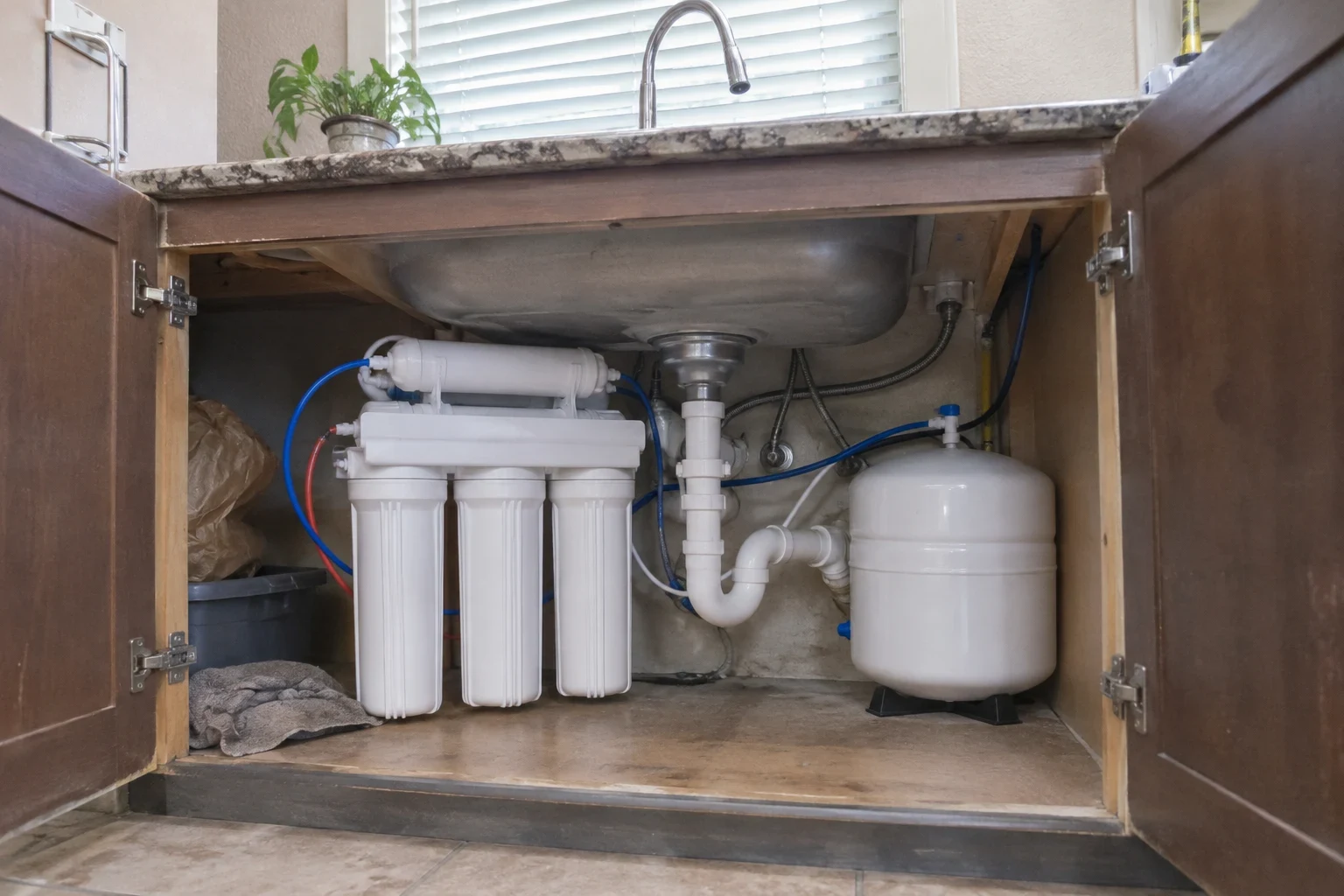
A filter under the sink treats one faucet, so your showers, tub and washing machine still run on disinfected water. Treating at the main line covers every tap in your home. If you want further reduction for drinking and cooking, reverse osmosis can be added at the kitchen downstream of the whole-home tank.
When does the carbon need replacing, and do you handle it?
Carbon life depends on how much media is in the tank, how much water your home uses and how much disinfectant arrives, and we size the bed with all three in mind. Our help continues after the install: when the system needs upkeep, a new filter or a service call, you reach us by phone. That includes swapping prefilter cartridges and changing out the carbon once it is spent.
How much disruption should I expect inside the house?
Most of the work happens where the main line enters, often in the garage or along an outside wall. When we work indoors, we lay floor covering along our path and wear shoe covers. The startup flush runs to a drain instead of your fixtures, and we clean the work area before we leave.
Get the chemical smell out of your water
Tell us which disinfectant your utility uses, or let us look it up, and we will explain the carbon and tank size that fit your home.