ServicesWhole-Home Filtration
Whole-Home Water Filtration in Tampa
We install whole-home filtration on your main water line so every tap, shower and appliance gets filtered water. We size the carbon tank to your plumbing and flow, protect the floors around the work area, and leave the space swept and dry before we leave.
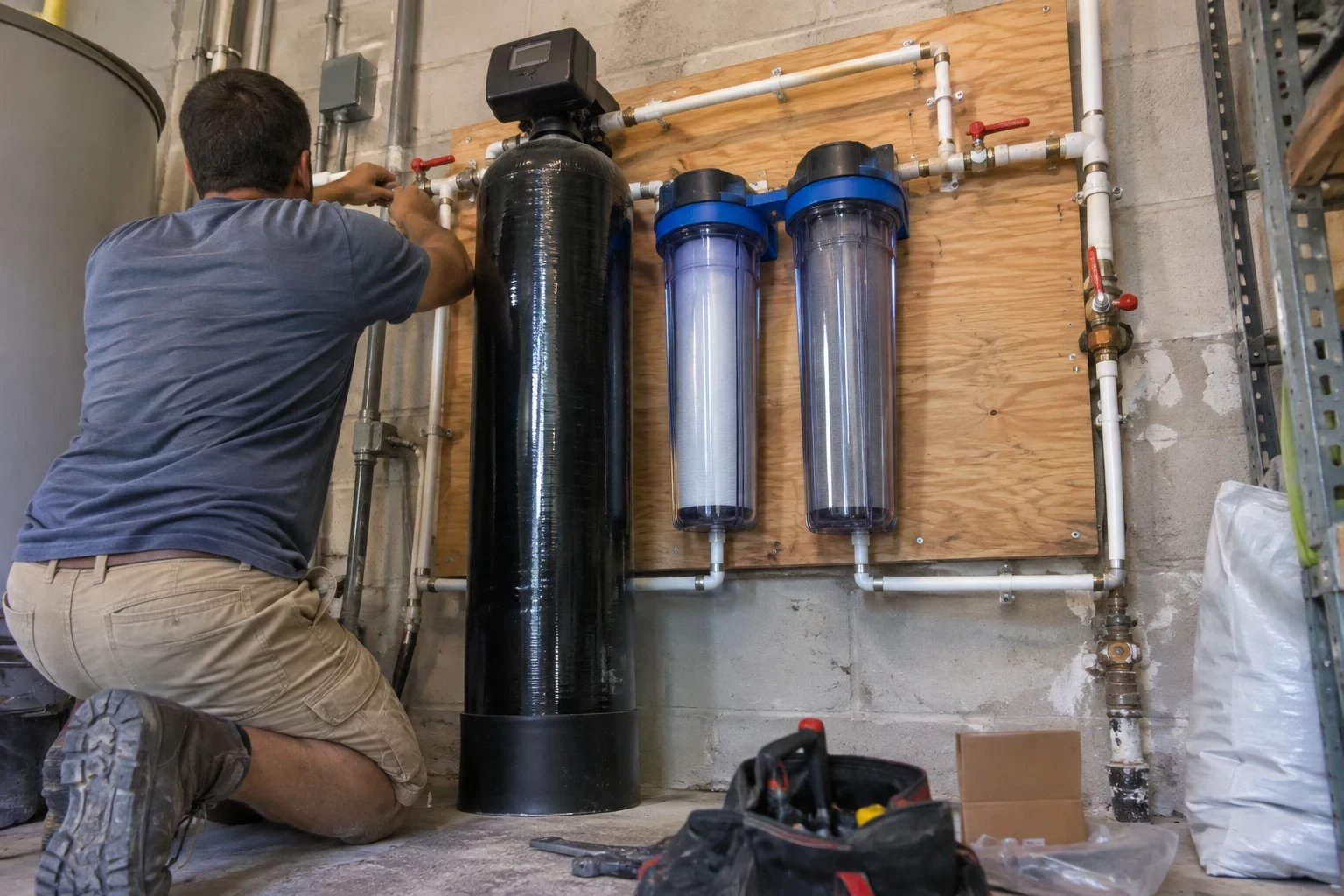
Filtered water from the main line to every fixture
We mount the system at the point where your main line comes into the house, past the meter and before the water heater. Incoming water runs through a sediment prefilter first, which holds back sand, grit and flakes of pipe scale. Next it passes through a tank filled with activated or catalytic carbon, where chlorine, chloramine and the taste and odor compounds they carry stick to the carbon surface. Since this happens before any branch lines split off, the shower, the washing machine and the kitchen faucet all receive the same treated water.
This approach makes sense when the problem shows up all over the house: a pool-like odor in the shower, an off taste at each faucet, or grit collecting in more than one aerator. If drinking and cooking water is all you care about, an under-sink Reverse Osmosis unit may do the job for less. Carbon leaves calcium and magnesium alone, so scale needs a different fix, which our Water Softeners page covers.
In much of Tampa, homes sit on slab with the main coming in at the garage or an outside wall. That usually leaves an open spot for the tank and keeps our work away from your living areas.
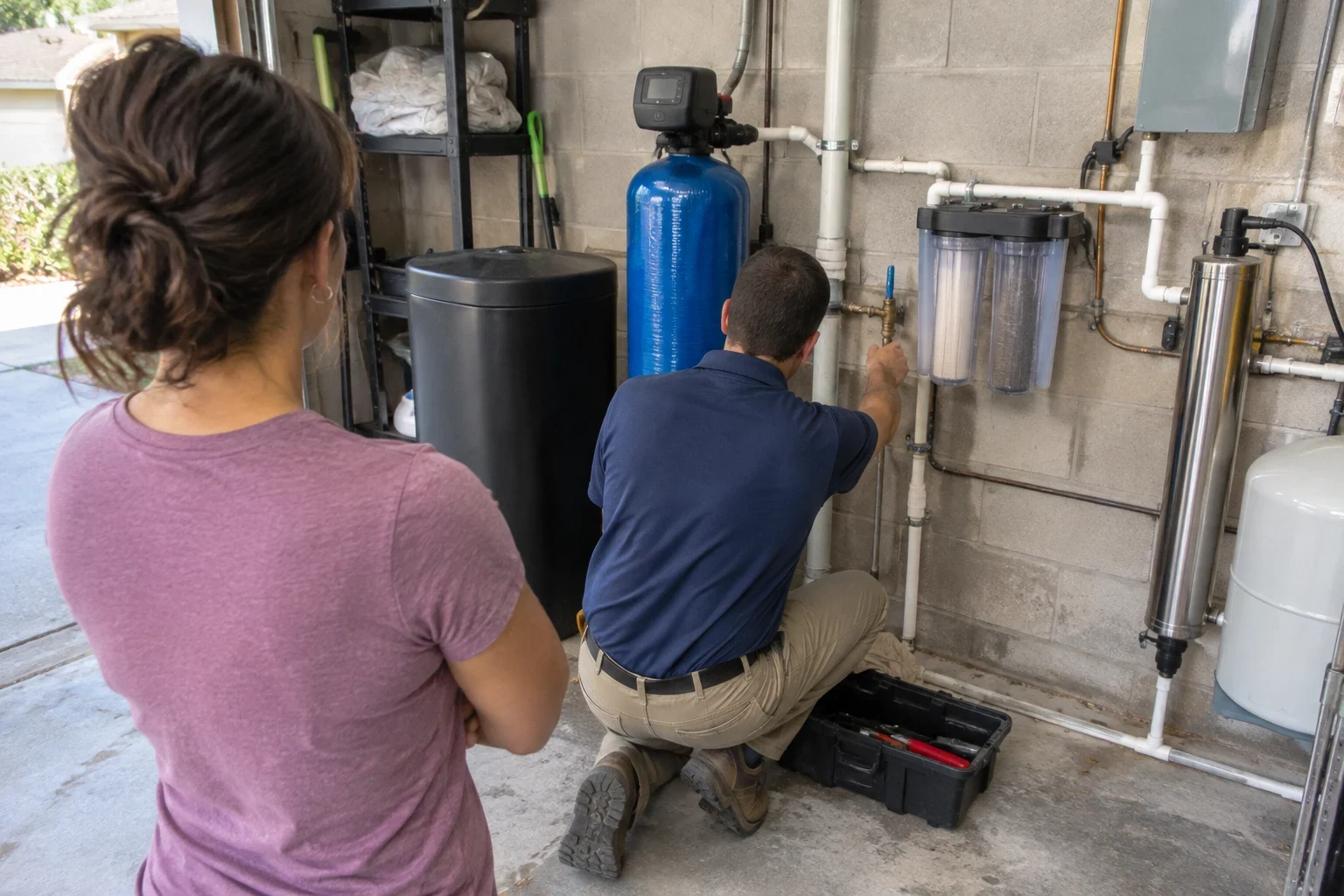
What the installation includes
- 01
Sediment prefilter stage
A cartridge housing ahead of the carbon tank traps particles before they reach the media. This keeps the carbon bed from clogging and protects the control valve and fixtures downstream.
- 02
Carbon tank sized to your flow
We size the tank by peak demand, not square footage. A home with three bathrooms running at once needs more gallons per minute than a two-bath home, and an undersized tank shows up as weak showers. Where the utility uses chloramine, we specify catalytic carbon, because standard carbon breaks it down much more slowly.
- 03
Bypass valve and isolation shutoffs
A bypass loop lets you route water around the system for service or a filter change without shutting off the whole house. Shutoffs on each side make cartridge swaps quick and dry.
- 04
Fittings matched to your pipe
We connect to copper, CPVC or PEX with the correct transition fittings for each. Where we cut into a copper main that carries the electrical ground, we install a bonding jumper across the new section so the ground path stays continuous.
- 05
Floor protection and cleanup
Drop cloths go down from the entry door to the work area, and we wear shoe covers inside. When we finish, we wipe down the fittings, bag the cut pipe and packaging, sweep, and take the debris with us.
- 06
Startup flush and walkthrough
New carbon releases fine black dust, so we flush the tank to drain until the water runs clear before opening it to your fixtures. Then we show you the bypass, the prefilter housing and the change schedule. Our ongoing customer support covers maintenance, filter replacements and service needs after the install.
Questions about Whole-Home Filtration?
Call(813) 322-5121When filtering at the main line pays off
Chlorine smell in the shower
Hot water drives dissolved chlorine into the air, so a closed bathroom often smells strongest. A pitcher filter in the kitchen does nothing for that.
Every faucet tastes the same
When a glass from the bathroom tastes just like one from the kitchen, the cause is the incoming water, not one fixture. One system at the main handles it more simply than a filter on each tap.
Grit in aerators and showerheads
Sand or flakes caught in aerator screens mean sediment is traveling through your lines. A prefilter catches it before it reaches valves, cartridges and appliance inlets.
Dry skin or dull laundry
Some people find their skin feels tight and fabrics fade sooner on disinfected city water. Taking chlorine out at the main is a sensible step if that bothers you.
An old housing nobody has serviced
A cloudy or stained filter housing holding a cartridge of unknown age can choke flow and stop filtering. If the existing unit is worn out, our Water Softener & Filtration System Replacement service handles the swap.
How the job runs on install day
- 1
Talk it through by phone
We ask how many bathrooms you have, what the pipe is made of, where the main comes in and what you notice in the water. With that we can size the system and give you a quote over the phone. If we need eyes on the plumbing first, we schedule a time to look.
- 2
Cover and clear the area
Our first job on arrival is laying drop cloths from your door to the install spot and beneath it, and with your permission we shift anything stored close by. We then close the main and drain the lines into buckets so no water hits the floor.
- 3
Cut in and mount the system
We cut the main, fit the bypass and shutoffs, and set the tank and prefilter on a level base. Every connection is secured and supported, so a full tank's weight never pulls on the pipe.
- 4
Flush, check and clean up
We run the carbon to drain until it clears, bring water back slowly to push out air, and inspect each joint for weeps at full pressure. Last, we sweep, wipe down, bag the debris and take it with us, leaving the space as dry as it was when we arrived.
What moves the cost of a whole-home system
We price each system from the plumbing and water use in your home, so two houses on the same street can land at different numbers. On the call we go through every line of the quote with you, which keeps surprises off the final bill.
- Media tank size
- A household that runs several showers and the washer at once needs a bigger tank to hold pressure steady. A bigger tank holds more carbon, and that raises the up-front cost.
- Carbon media grade
- Catalytic carbon, used for chloramine, costs more than standard activated carbon. We only specify it when the disinfectant in your supply calls for it.
- Location of the main
- Cutting into a main in an open garage wall is quick work. A main tucked inside a finished closet, or one we have to reroute to make room for the tank, takes more labor and parts.
- Pipe type and permit needs
- Older copper can call for a bonding jumper and transition fittings, while PEX and CPVC each use their own connectors. When the job needs a plumbing permit, we pull it and show it on the quote.
Common questions about filtering at the main
Do I lose shower pressure once the system is in?
With a tank matched to your household, the drop is small enough that most people never notice it. When pressure does sag, the usual causes are a tank undersized for peak demand or a sediment cartridge packed with grit. We size for your busiest moment, like two showers and the washer running together, and we show you how to tell when the prefilter needs changing.
Is chloramine handled too, or just chlorine?
Standard activated carbon pulls chlorine out quickly, but chloramine holds together more tightly and breaks down much more slowly in that media. Catalytic carbon is made for chloramine at real household flow rates. Your utility's annual water quality report says which disinfectant it uses, and we choose the media to match. The Chlorine & Chloramine Removal page goes into more detail.
Does a carbon system take care of hard water?
It does not. Carbon captures disinfectants and the compounds behind bad taste and odor, while calcium and magnesium flow straight through. If you see white crust on fixtures or spots on glassware, a softener is the fix, and we can plumb one in next to the filter.
What parts wear out, and when?
The sediment prefilter cartridge is the part you change regularly, on a schedule set by how much grit comes through your line. The carbon bed lasts much longer and is due for replacement when the chlorine taste begins to return. Our ongoing customer support covers both.
What will my house look like while you work?
Most of it will not be touched. The work stays at the main line, which is usually in the garage or on an outside wall. Drop cloths go down, drained water goes into buckets, and we haul away cut pipe and packaging, leaving the area swept and dry.
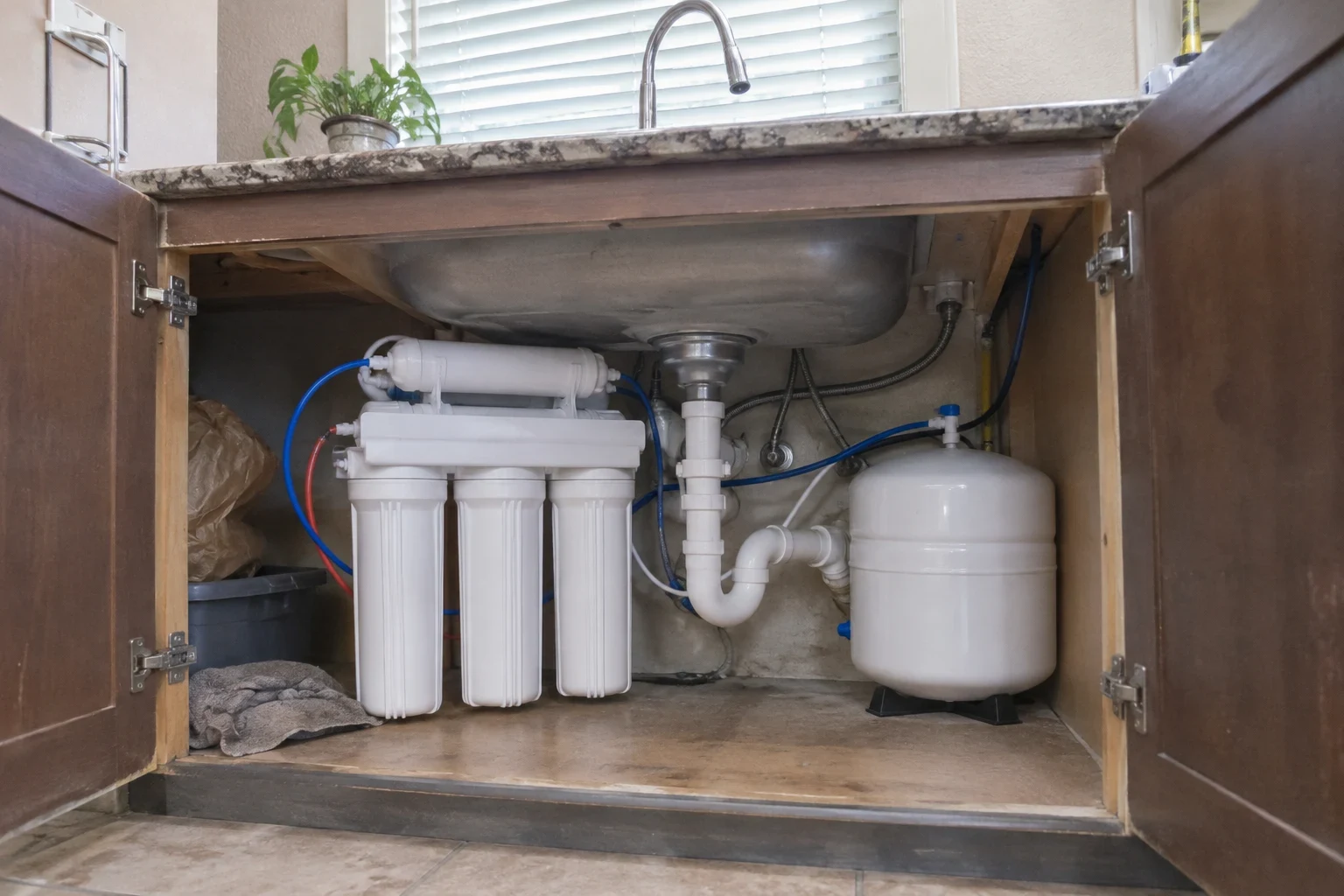
Filtered water at every faucet, with a tidy install
Tell us about your home's bathrooms, pipe and what you notice in the water, and we will size the system and give you a clear quote on the phone.