ServicesWell Water Treatment
Well Water Treatment in Tampa
If your well water smells like rotten eggs, stains fixtures orange or leaves scale on the shower glass, we size and install equipment that targets the cause. We work on drop cloths, route every drain line properly and leave your equipment area cleaner than we found it.
What well treatment fixes, and when it fits
Private wells around Tampa draw from limestone, so the water picks up calcium and magnesium, and many wells also carry dissolved iron and hydrogen sulfide gas. No utility treats any of that. Well treatment is the equipment between your pressure tank and your home's plumbing that removes what your particular well puts into the water.
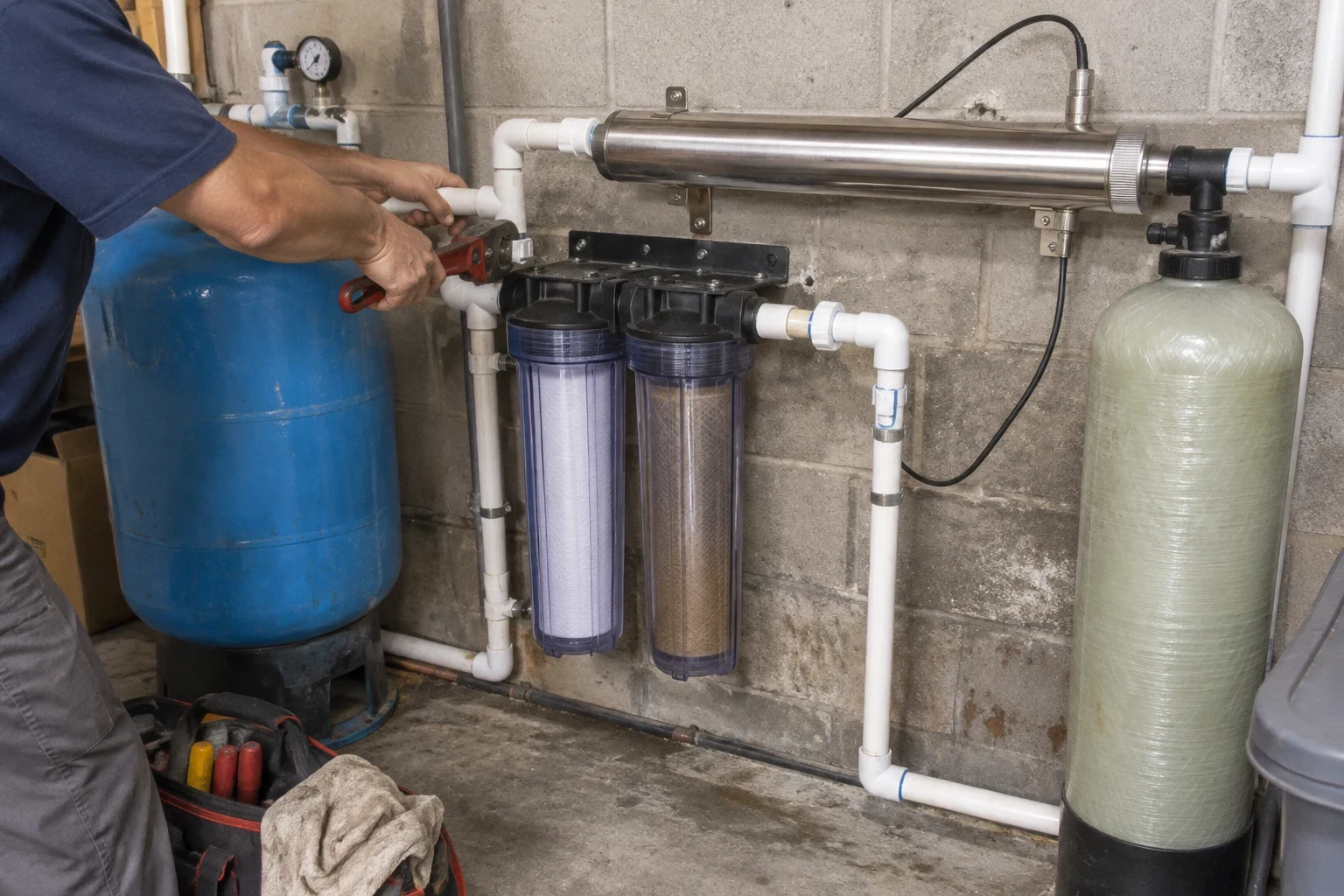
The right setup depends on what is in the water and how much. Sulfur and iron usually call for an oxidizing filter, such as air injection, which turns the dissolved gas and iron into particles a media bed can trap and backwash away. Hardness calls for a softener placed after the iron stage. Bacteria concerns call for UV as the final step. We match stages to the problem instead of stacking equipment you do not need, and if you already have a recent lab report on your well, share it on the call so the plan starts from real numbers.
Homes on a municipal hookup face a different issue, mostly disinfectant taste and odor. We cover those through whole-home filtration and chlorine and chloramine removal, each with its own page.
What a well treatment install includes
- Sediment prefilter
- The first stage after the pressure tank is a sediment filter, either a spin-down screen or a cartridge housing. It catches sand and grit from the well so they never reach the control valve seals or clog the media beds downstream.
- Iron and sulfur oxidation
- An air-injection filter holds a pocket of air at the top of its tank. Water passing through that pocket oxidizes iron and hydrogen sulfide into particles the media bed below can hold. A timed backwash clears out the trapped iron and recharges the air.
- Softening where hardness warrants it
- If your water is hard enough to scale the water heater and fixtures, the softener goes after the iron filter so iron never touches the resin. Our water softeners page explains how we size them.
- UV disinfection option
- A UV sterilizer with a quartz sleeve sits at the end of the line. Because sediment and iron are already removed upstream, nothing shades the lamp's light from the water.
- Bypass, drain line and air gap
- Every system gets a bypass valve so you keep water during service. The backwash drain empties across an open air gap, which physically separates dirty flush water from your supply so it cannot be pulled back in.
- Startup and cleanup
- We flush each stage, check every fitting for drips, wipe the tanks down and take away the boxes, packaging and cut pipe.
Signs your well needs treatment
Rotten-egg smell
Hydrogen sulfide gas causes it. You will usually notice it most at the hot tap, because heat and the water heater's magnesium anode rod both tend to intensify it.
Orange or brown stains
Dissolved iron oxidizes when it meets air. It leaves rust marks in toilets, tubs and laundry, and on walls and walkways the sprinklers reach.
White scale and spotting
Crust on aerators, showerheads and glass doors is calcium and magnesium. The same mineral builds up inside your water heater and cuts its efficiency.
Black specks or slime
Dark specks or a slick film in the toilet tank often point to manganese or iron bacteria, which keep fouling fixtures until the water is treated.
Changes after rain or well work
A shift in taste, color or cloudiness after heavy rain or a pump replacement is a reason to look at treatment before it settles in as normal.
How install day runs
- 1
A detailed phone conversation
We ask what you smell and see, your pump size if you know it, any report you have and where your pressure tank sits. That tells us which stages to bring and how much space they need.
- 2
Protect the work area first
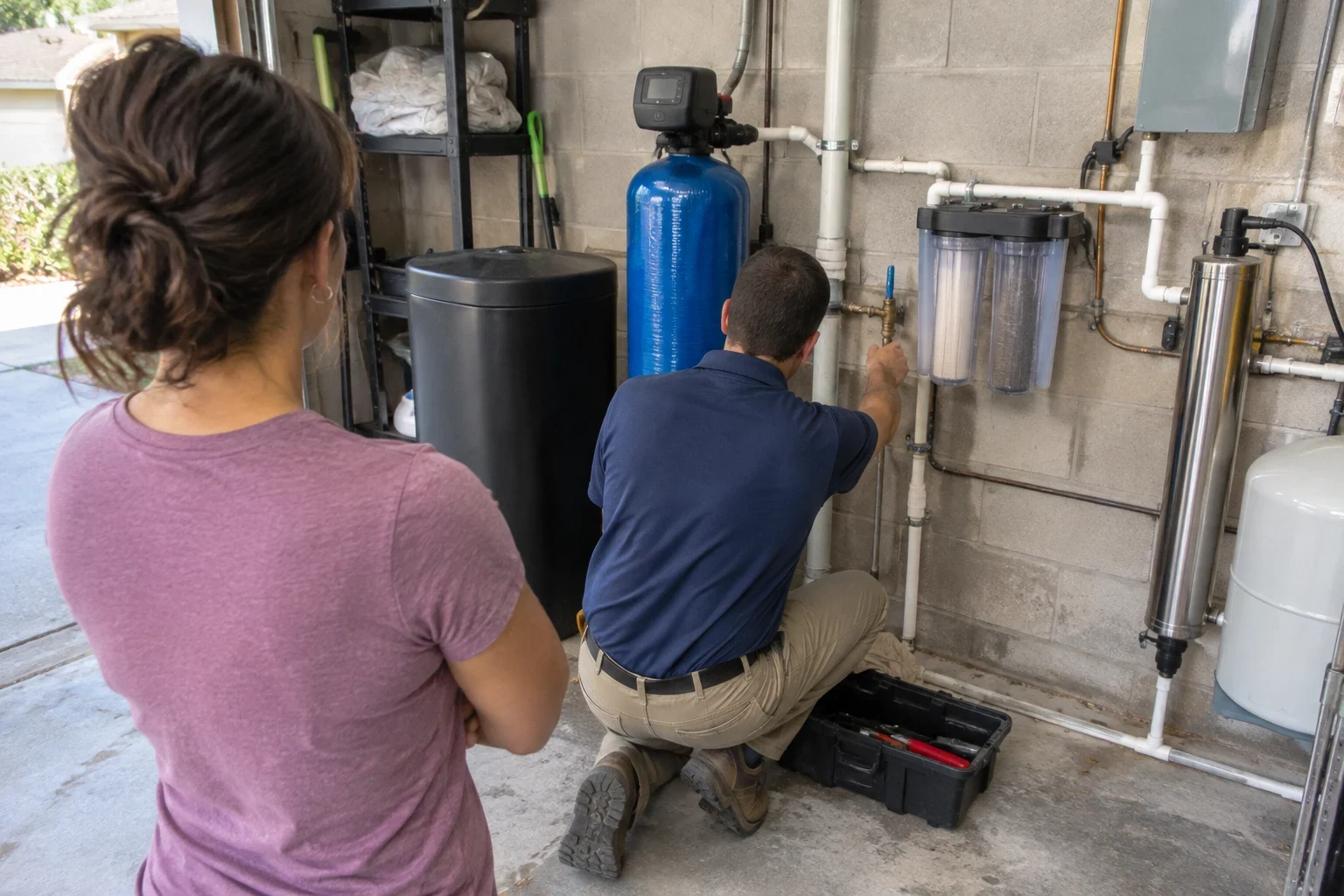
Before a pipe is cut, we lay drop cloths along the path to your equipment and set mats under the tanks. In a garage, we cover the floor and move or shield anything stored nearby.
- 3
Shut down and plumb in
We switch the well pump off at the breaker, bleed off pressure and cut in after the pressure tank. Stages go in order, and the drain line runs to an approved point with an air gap.
- 4
Start up and walk through
We bring the media online slowly, run the first backwash cycles and pressure-check every joint. Then we show you the bypass and the control valve settings.
- 5
Clean before we leave
Flush water is caught and drained, not left on the floor. We wipe surfaces, sweep up and take every bit of debris with us.
What moves the cost of well treatment
Well treatment is priced by what your water needs, not by a fixed package. On the call we explain which stages fit and why. Your quote lists each piece of equipment so you can see exactly what you are paying for.
- Water chemistry
- Heavier iron and sulfur loads need larger oxidizing tanks, or chemical feed such as chlorine or hydrogen peroxide injection, instead of air injection alone.
- Pump flow and household demand
- Tanks are sized to your pump's gallons per minute and the number of bathrooms. An undersized tank cannot backwash hard enough to stay clean.
- Number of stages
- A sulfur-only fix can be one tank. Iron plus hardness plus UV adds equipment, plumbing and labor.
- Location and access
- Open garage wall space is the simplest install. A tight closet, or an outdoor spot that needs a pad and cover, takes more time, as does running a new outlet or drain.
- Removing old equipment
- Pulling out a failed tank adds labor and disposal. Our water softener and filtration system replacement page covers swap-outs in more detail.
Well water treatment questions
Something not covered here? (813) 322-5121
Will a water softener alone get rid of my sulfur smell?
No. A softener trades calcium and magnesium for sodium or potassium, and hydrogen sulfide gas moves right through the resin untouched. Iron in the water can also coat the resin beads and shorten their working life. Sulfur has to be oxidized and filtered out first, so that stage normally goes ahead of the softener.
Why does my hot water smell worse than my cold water?
The magnesium anode rod inside a water heater can react with sulfates and sulfur bacteria in well water, which produces extra hydrogen sulfide. Heat then drives that gas out at the faucet. Treating the water before it reaches the heater removes most of what feeds the reaction, and if the anode looks like part of the problem, we will tell you.
Where does the backwash water go?
Iron filters backwash on a timer, usually overnight, and send the captured iron to drain. We run that line to a laundry standpipe or another approved drain point, with an air gap at the outlet. The cycle frequency is set to your iron level so the media stays clean without wasting water.
Will I be without water during the install?
Only while we cut into the line and connect the stages, which usually takes a few hours. Once the bypass valve is in place, you can use water again while we finish startup and the remaining work.
What maintenance does a well system need?
Sediment cartridges are changed on a regular basis, UV lamps are replaced on a fixed schedule, and oxidizing media eventually has to be rebedded. We stay involved after the install, helping with upkeep, swapping filters and handling service calls as they come up. For softener care in particular, see our water softener repair and maintenance page.
Get your well water working for you
Describe the odor, the stain colors and where they show up, and we will lay out which treatment stages your well calls for and why. When install day is done, the system is running and the floor around it is swept clean.