ServicesWater Softeners
Water Softener Installation in Tampa
Calcium and magnesium in your water build up as scale inside the water heater, across glass shower doors and in faucet aerators. We size an ion-exchange softener to strip those minerals at the main line, install it with your floors covered, and leave the work area cleaner than we found it.
How a Softener Works and When You Need One
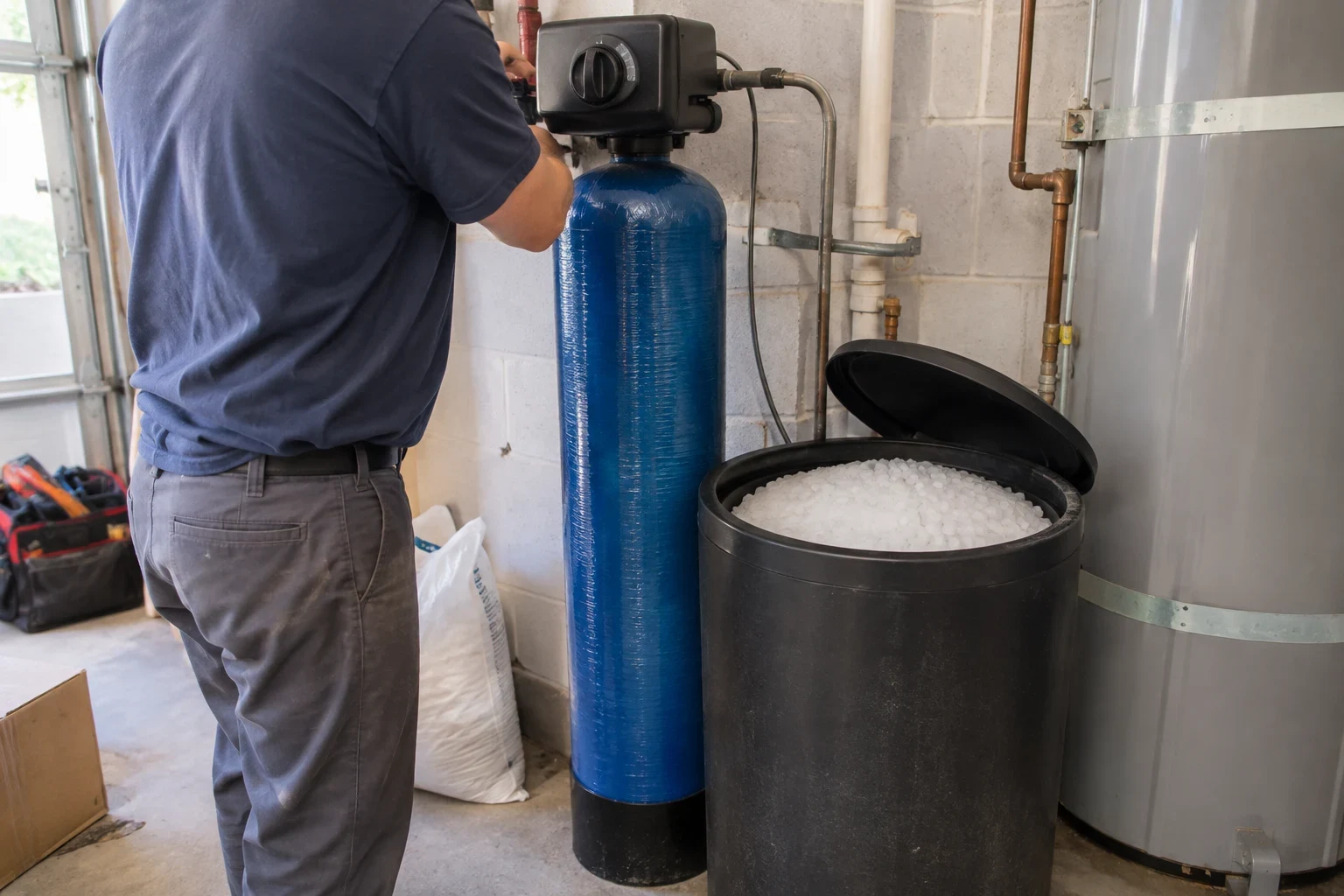
A softener's mineral tank holds a bed of resin beads loaded with sodium or potassium ions. As hard water passes over the beads, calcium and magnesium latch on and sodium or potassium is released in their place. When the beads are saturated, the control valve triggers a regeneration: brine from the salt tank rinses the resin and carries the hardness minerals out the drain line.
A softener makes sense when scale is the problem. Chalky crust on fixtures, dishes that dry spotted, or a tank heater that pops and crackles while it heats are the usual clues. Softening does nothing for chlorine taste, odor or sediment, so if that is your real complaint we will steer you to Whole-Home Filtration or Reverse Osmosis instead.
Sizing starts with the hardness figure your utility publishes, then factors in the number of occupants and your typical daily gallons. An oversized tank waits too long between regenerations and the resin can foul. An undersized one regenerates constantly and burns through salt.
What Your Installation Includes
- 01
Resin tank and brine tank
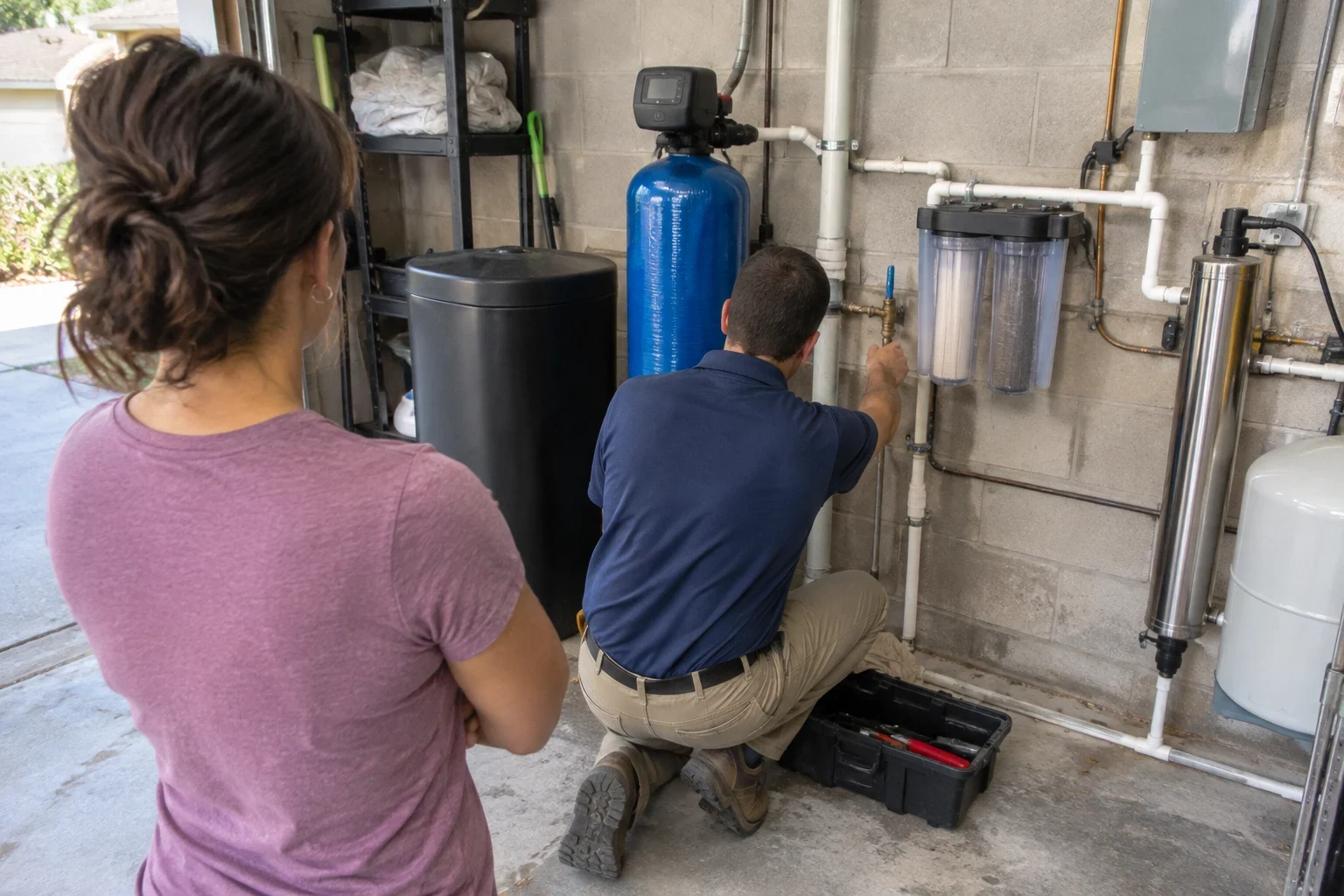
A mineral tank filled with high-capacity resin sized to your grain requirement, and a brine tank fitted with a float or safety shutoff so it cannot overfill.
- 02
Metered control valve
We lean toward demand-initiated valves that count gallons instead of running on a set clock. In weeks when your home uses little water, the softener skips regenerations and saves salt.
- 03
Bypass and isolation valves
The bypass takes the softener offline for service, or lets you send hard water to an irrigation line, while the rest of the house keeps running.
- 04
Code-correct drain line
Regeneration water discharges into a drain or standpipe through an air gap. That open space between the hose and the drain stops dirty water from being pulled backward into your plumbing.
- 05
Floor protection and cleanup
We cover the floor from the entry to the install spot, wear shoe covers inside, and wipe down the area when we finish. Boxes, packing and pipe scraps leave with us.
Questions about Water Softeners?
Call(813) 322-5121Signs Your Home Needs a Water Softener
Crust on fixtures and showerheads
White or tan deposits ringing faucet bases, and showerhead nozzles that spray sideways, are calcium carbonate left behind when water dries.
Spotted glassware
Glasses come out of the dishwasher hazy even with rinse aid. Hardness minerals also tie up detergent so it cleans less effectively.
A noisy water heater
When a tank heater crackles or rumbles, mineral sediment has usually collected on its floor. Water caught beneath that layer flashes to steam, wasting energy and wearing out the tank sooner.
Soap that will not lather
Calcium and magnesium react with soap and form scum, so you go through more shampoo and still feel a film after rinsing.
Short life on appliances
Ice makers, dishwasher inlet valves and the heat exchangers in tankless heaters wear out early as scale closes off their narrow passages.
How Install Day Runs
- 1
Sizing on the phone
We ask about household size, bathroom count, the type of water heater you run and any filtration already in place. Those answers set the grain capacity and valve type we recommend.
- 2
Protecting the work area
Drop cloths go down along the walking path and around the install spot first, usually a garage or utility closet near the main line.
- 3
Cutting in at the main
With the water shut off, we cut into the line just past the main shutoff and fit the bypass, the softener and the drain connection. If your utility treats with chloramine, we discuss adding a carbon stage ahead of the resin to protect it.
- 4
Startup and programming
We load the brine tank with salt, set your hardness and regeneration time on the valve, then run a manual regeneration and check every fitting for drips.
- 5
Handoff and tidy-up
You get a short walkthrough on adding salt, using the bypass and reading the valve display. Then we vacuum the area, wipe down the equipment and carry out every scrap.
What Sets the Price of a Softener
Two things drive your quote: the equipment your water and household demand, and the plumbing needed to fit it into your home. We walk through every line item with you on the phone, so the final bill lines up with what we agreed on.
- Grain capacity
- A bigger household or harder water calls for more resin and a taller mineral tank. The equipment costs more, but a larger bed regenerates less often.
- Control valve type
- A timer head regenerates on a fixed schedule whether you used water or not, and it is the cheaper option up front. A metered valve that regenerates only when the gallon count calls for it carries a higher price, and it tends to recover the difference through lower salt and water use over time.
- Plumbing access
- When your garage already has a softener loop stubbed out, the cut-in is quick. Running new pipe through a wall, the attic or around a slab foundation adds labor and fittings.
- Add-on stages
- Adding a carbon prefilter for chlorine or chloramine, or a sediment cartridge, ahead of the softener means more equipment and more connections.
Water Softener Questions
Will a softener make my water salty?
No. The sodium traded in matches the hardness taken out, and at normal levels you will not taste it. If you are watching sodium, potassium chloride works in the same brine tank, or a Reverse Osmosis system can supply your drinking water.
How often do I add salt?
Salt use follows your hardness level, your household's daily water draw and the way the valve is programmed. A good habit is a monthly look inside the brine tank, topping it up once it falls to roughly a third full. Pellet salt is less prone to bridging, where a hard crust forms across the tank and stops brine from forming beneath it.
Does a softener remove chlorine or improve taste?
Not on its own. Ion exchange is designed to swap out calcium and magnesium, not disinfectants or odors. For taste and smell we add a carbon stage, covered on our Chlorine & Chloramine Removal and Whole-Home Filtration pages.
I already have an old softener. Can you just swap it?
Yes. We disconnect the old mineral and brine tanks, drain them outdoors so nothing spills on your floor, and haul them away. Our Water Softener & Filtration System Replacement page has the details.
What happens after installation?
We offer ongoing customer support for maintenance, filter replacements, and service needs. If the control head misbehaves or the resin bed needs cleaning later on, our Water Softener Repair & Maintenance service handles it.
Ready to Stop Scrubbing Scale?
Tell us about your home and water use, and we will recommend a softener size and explain exactly what install day looks like.