ServicesSystem Replacement
Water Softener & Filtration System Replacement in Tampa
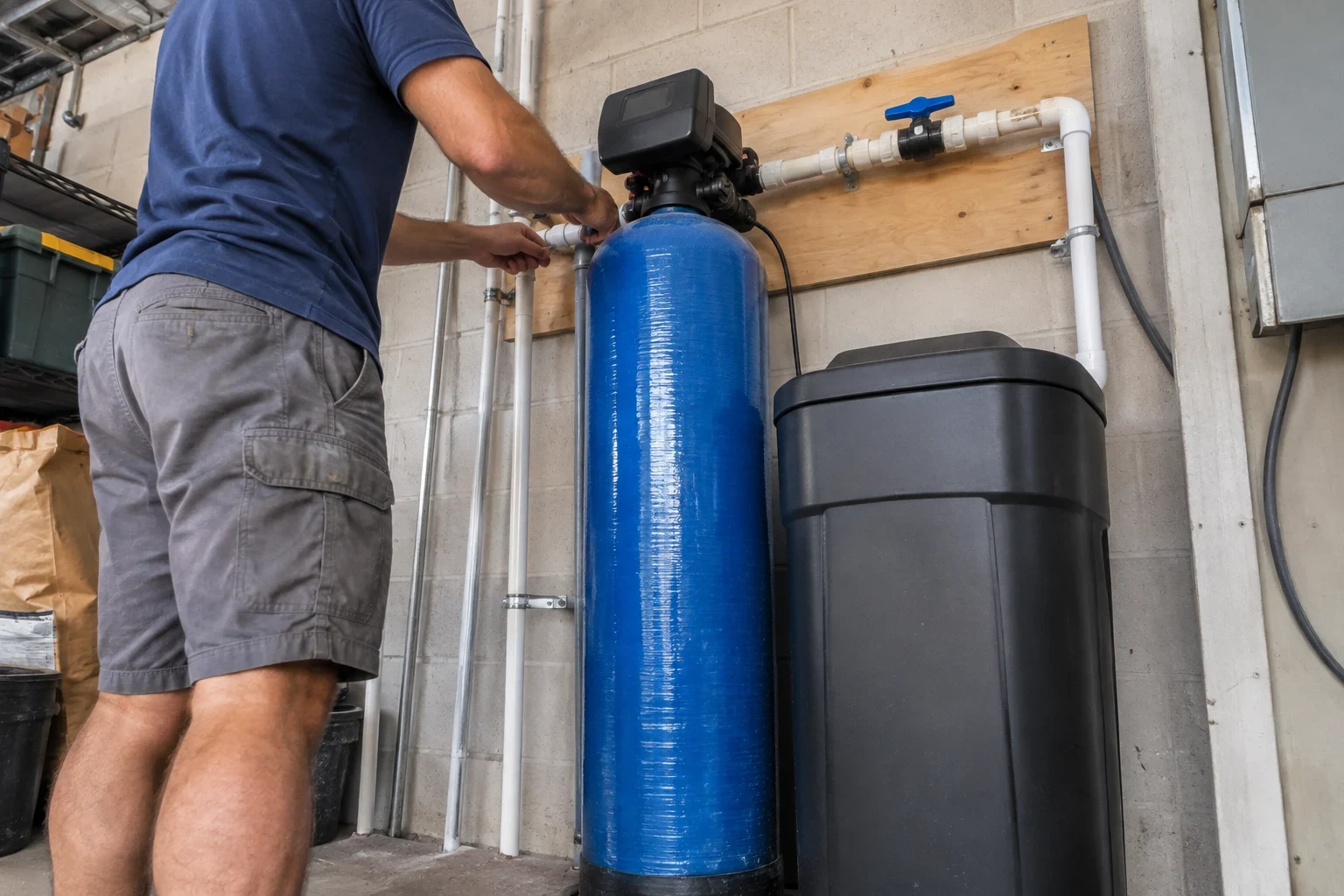
When a softener or whole-home filter can no longer be repaired, we take out the old tanks, set the new system on the existing loop where it fits, and clean up behind ourselves. You get treated water back the same visit and a tidy space where the old unit stood.
When replacement makes more sense than another repair
Softeners and filters wear out in predictable ways. Resin beads break down and turn to mush, especially when chlorine or chloramine in city water has been oxidizing them for years. Carbon media gets exhausted and channels. Control valves crack at the body, and older models go out of production, so seals and pistons stop being available.
Once two or three of those failures stack up, putting parts into an old tank is money spent on a system near its end. We look at the valve, the media, the tank and the plumbing, then tell you plainly whether a repair through our Water Softener Repair & Maintenance service is still reasonable or whether a full swap is the better use of your money.
If replacement is the call, we size the new equipment to your household and plumbing, not simply to whatever was there before.
What a replacement visit includes
Protecting the work area
Drop cloths and floor protection go down before any tool comes out. A brine tank tipped or drained carelessly leaves salt water and sludge on a garage floor or utility closet, so we drain both tanks into buckets and the drain line first.
Removing the old equipment
We disconnect the mineral tank, brine tank and any filter housings, cap or cut the old connections, and carry everything out. Spent resin, old carbon and leftover salt leave with us.
Setting the new system
The new tank goes on a level, clean pad with a fresh bypass valve so you can isolate it for service later. We connect with PEX or copper to match your existing lines and use proper transition fittings where metals meet.
Drain, overflow and bonding
Backwash and regeneration water discharges above the drain opening with an open break between the hose and the receptor, so dirty water has no route back up into the valve. Where metal pipe is cut, a bonding jumper bridges the gap and keeps your home's electrical grounding path continuous.
Startup and programming
We fill the tank slowly to purge air, run a first regeneration or backwash, and set the valve for your household size and water use. Then we check every joint for weeping under full line pressure.
Final cleanup
Floors get swept and wiped, packaging leaves with us, and the area is left neat enough that the only sign of the work is the new equipment.
Signs your system is ready to be replaced
Resin beads in faucets
Small amber or tan beads in aerators or toilet tanks mean the distributor tube or upper basket has failed. Resin is escaping the tank and the bed is already short.
Hard water spots are back
White crust on fixtures and glass shower doors after the softener has been running means it is no longer exchanging hardness. Worn-out resin is a common cause and cannot be restored by adjusting the valve.
Pressure has dropped through the house
Fouled or compacted media restricts flow. If pressure improves when you put the unit in bypass, the media or the tank internals are the problem.
Leaks or a cracked tank
Fiberglass tanks can crack at the neck, and older valves crack at the body. A slow weep onto the floor usually signals a failure that a seal kit will not fix.
Parts are no longer made
When a control valve model is discontinued, every future breakdown becomes a hunt for used parts. That is often the point where a new system costs less over time.
How the job runs on the day
- 1
Talk it through by phone
You describe the current system, its age and what it is doing wrong. We ask about where it sits and your pipe size so the right equipment comes on the truck.
- 2
Confirm on arrival
We look at the existing tanks, valve and plumbing loop before anything is disconnected and explain what we found and why replacement is the recommendation.
- 3
Shut off, drain and remove
Water is shut off at the main or the bypass, lines are drained, and the old system comes out with floors already covered. Most of your house water returns as soon as the bypass is set.
- 4
Install and start up
The new system is plumbed, programmed and run through its first cycle while we check for leaks and confirm flow at your fixtures.
- 5
Clean up and walk through
We remove every piece of old equipment, clean the area, and show you the bypass, the salt level and the settings so nothing is a mystery later.
What sets the price of a replacement
Every replacement is quoted after we know what is being removed and what is going in. The price depends far more on the equipment and the plumbing around it than on the hours spent. You get your quote by phone first, and we explain each line before work starts.
- Type and size of the new system
- A softener's grain capacity and media volume, or a filter's tank size and media type such as catalytic carbon for chloramine, drive the equipment cost. Larger households need larger tanks.
- Plumbing changes
- Reusing a sound loop and bypass keeps labor down. Moving the location, upsizing from 3/4 inch to 1 inch, or replacing corroded copper adds parts and time.
- Drain and power access
- The valve needs an outlet and a proper drain with an air gap. If either has to be added or rerouted, that work is part of the quote.
- Haul-away and extra components
- Removing a second tank, an old sediment prefilter or abandoned housings adds disposal and labor. A new prefilter ahead of the main tank adds equipment but protects the media.
Replacement questions we hear often
Something not covered here? (813) 322-5121
Should I replace my softener with the same kind of system?
Not automatically. Some homes had a softener installed when a carbon filter for taste and chlorine was the real need, and some need both. We ask what bothered you about the water before and match the replacement to that.
How long will we be without water?
Usually only while the old tanks are being disconnected and the new ones plumbed in. Once the bypass is in place, most of your home can run on untreated water while we finish setup.
Can you replace a system another company installed?
Yes. We remove equipment from any brand. If the existing loop and bypass are in good condition we can often reuse them, which keeps the job smaller.
What happens to the old tanks and salt?
They leave with us. We drain the brine tank, bag spent resin and media, and carry everything out so nothing is left in your garage or at the curb.
Who do I call when the new system needs service?
The same number you used to set up the replacement. We stay with you after the install for routine upkeep, spent filter cartridges and any service visit the equipment needs. Salt questions, media changes and valve adjustments go to the people who plumbed the system and already know its layout.
Ready to retire the old unit
Tell us what your current system is doing and where it sits. We will explain whether repair or replacement makes sense and what the new setup involves.