ServicesSoftener Repair & Maintenance
Water Softener Repair & Maintenance in Tampa
When spots return to your glasses or the brine tank fills with water, a single part is usually to blame. We trace the fault to the valve, injector, float or resin, repair it, and work over drop cloths so your garage or utility closet looks the way we found it.
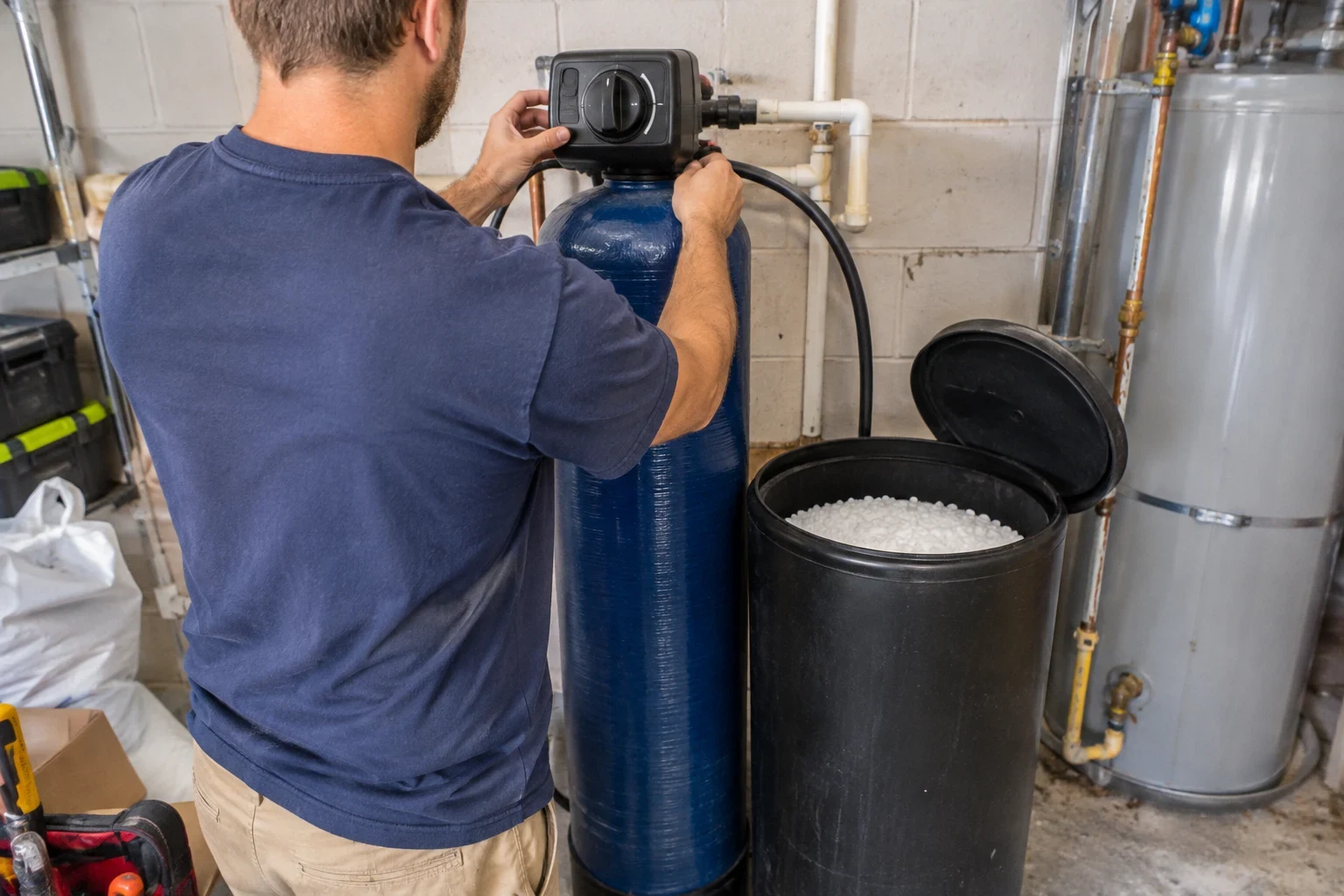
What softener repair actually involves
Inside the tall tank, resin beads hold sodium ions and swap them for the calcium and magnesium in your water. The beads only keep working if they are recharged. Every few days the control valve runs a regeneration: backwash, brine draw through a small injector, slow rinse, fast rinse, then a refill of the salt tank. When one stage fails, the resin stays loaded with hardness and hard water reaches your taps.
Most of the calls we get come down to a clogged injector, a stuck brine float, worn piston seals in the control valve, or a hard crust of salt sitting above the water line. Those are repairs, not replacements. When the resin is exhausted or the valve body is cracked, we tell you plainly and explain what our Water Softener & Filtration System Replacement service would involve instead.
Regular maintenance keeps the small problems small. A yearly brine tank cleanout and injector service heads off most of the failures we see.
What a repair or maintenance visit covers
Control valve inspection
We pull the valve head and check the piston, spacer stack and seals for scoring or swelling. Worn seals let water bypass the resin or run to drain nonstop. We replace them with parts matched to your valve model.
Injector and screen service
The injector is a small venturi that draws brine into the resin tank. Sediment and salt residue block it, so the system runs a cycle but never actually pulls brine. We flush or replace the nozzle, throat and screen.
Brine tank cleanout
We break up salt bridges and mushy salt, scoop out sludge and undissolved grit, and rinse the tank. We check the float assembly and brine line so the refill stops at the right level.
Settings and timer reset
Power outages and old batteries can wipe the clock or regeneration schedule. We set the time, hardness value and capacity so the system regenerates when your household's water use calls for it, not too often and not too rarely.
Bypass and drain line check
We confirm the bypass valve is fully in service, the drain line has its air gap and is not kinked, and the flow control washer is not clogged.
Protected, tidy work area
Drop cloths and towels go down before any part comes off. We carry out the old salt sludge and worn parts, wipe the tank tops and floor, and leave nothing behind but a working softener.
Signs your softener needs service
Spots and scale are back
A chalky film returning to shower glass or faucet aerators usually means the resin is no longer being recharged. Bridged salt or a plugged injector is the common cause.
Salt sits at the same level
If the salt has stayed at the same height for months, the valve is not drawing brine. A hardened salt crust or a blocked injector is the usual culprit, and humid Tampa summers help that crust form faster.
Too much water in the salt tank
Some water at the bottom of the salt tank is there by design. When it climbs to half the tank or spills over, look to a float that will not drop, a clogged brine line or a valve that never finishes its draw stage.
Water running to drain nonstop
Flow you can hear at the drain line while every tap is off usually points to worn piston seals. That runoff wastes water and shows up on your bill.
Low pressure or brown water
A drop in pressure can come from crushed resin or a cracked distributor tube. Small tan resin beads caught in a faucet aerator confirm it.
How the service visit runs
- 1
We talk through symptoms by phone
You tell us what you are seeing and, if you know it, the brand and valve model. That helps us bring the likely seals, injectors and floats on the first trip.
- 2
We protect the area and diagnose
Drop cloths go down around the tanks. We put the system in bypass, run a manual regeneration and watch each stage to see which one fails.
- 3
We explain the fix before doing it
You hear what is wrong, which part is involved and what it costs to repair. If repair does not make sense, we say so.
- 4
Repair, reset and tidy up
We replace the faulty parts, reprogram the controller, return the system to service and check for leaks. Then we bag the old salt and parts and wipe everything down.
What moves the cost of a repair
We give you the price after we find the fault, not before. Most repairs are a part and a short visit, and a few take longer. These are the things that make the difference.
- Which part failed
- A flushed injector or new float costs far less than a seal kit, motor or full control valve.
- Valve brand and parts availability
- Common valves have parts on hand. Older or proprietary units may need ordered parts or an adapter.
- Resin condition
- Fouled or crushed resin has to be removed and replaced, which adds material and time compared with a valve repair.
- Brine tank state
- A tank packed with hardened salt or heavy sludge takes longer to clear than one that needs a routine rinse.
Softener repair questions
Something not covered here? (813) 322-5121
How often should my softener be maintained?
Once a year suits most systems. That visit covers a brine tank cleanout, an injector flush and a check of the hardness and capacity settings. A home that uses a lot of water, or a softener running an older valve, may need attention more often.
Can you fix a softener someone else installed?
Usually, yes. Most residential units run on one of a handful of control valve designs, so their seals, injectors and floats are parts we already know, whoever put the system in. When parts for an older model are no longer made, we tell you before any work begins.
What kind of salt should I use?
Pellet or evaporated salt dissolves more completely and leaves less residue than rock salt, which helps prevent mushing and sludge at the bottom of the tank. Keep the salt a few inches above the water line instead of filling the tank to the top, since a packed tank encourages bridging.
Will the repair make a mess in my garage?
No. We lay drop cloths and towels before opening anything, catch water from the tanks in buckets, and carry out old salt and worn parts. When we leave, the floor and tank tops are wiped clean.
Do you help after the repair is done?
Yes. We offer ongoing customer support for maintenance, filter replacements, and service needs. If your home also has Whole-Home Filtration or Reverse Osmosis equipment, we can look after those on the same visit.
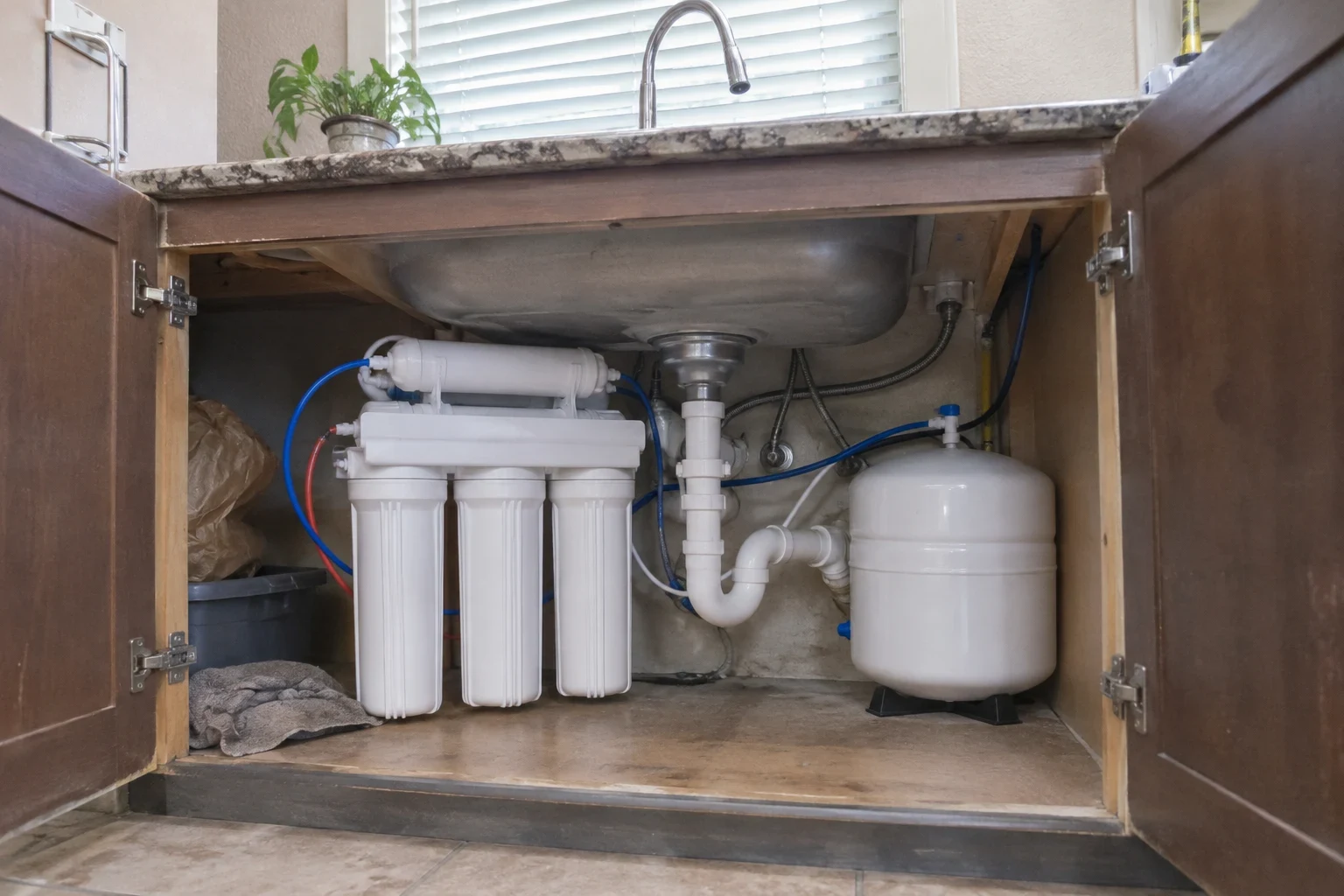
Bring back soft water at the tap
Give us a rundown of the symptoms, plus the valve model if you have it, and we will arrive with the parts most likely needed. We fix the fault and wipe down the area before we go.